
What does a Chartered Accountant do when a global pandemic shuts down every exam hall on the continent? If you’re Nick Riemer CA(SA), you build a tech company.
In the latest episode of Difference Makers Discuss, host Sinead Donovan sat down with Nick, co-founder and CEO of Invigilator App, for a wide-ranging conversation that touched on educational equity, the ethics of AI, entrepreneurship, and why the Chartered Accountancy qualification might just be the best-kept secret in tech. It’s a conversation packed with insights that are as relevant to the boardroom as they are to the lecture hall.
The Problem That Started It All
Cast your mind back to March 2020. Universities around the world were scrambling. But in South Africa, the challenge was compounded by stark realities: unreliable electricity (load shedding), limited internet connectivity, and students who simply couldn’t afford the hardware required by the big US and UK proctoring solutions that were flooding the market.
Nick and his co-founders saw a gap, and more importantly, a responsibility. “There’s surely a way to create a more inclusive tech stack,” was the thinking. So they got to work, and within months Invigilator App was live, enabling South African universities to continue assessments through the pandemic.
The idea was simple but powerful: an online exam monitoring solution that works on entry-level smartphones, runs offline, and doesn’t require a fibre connection or a high-spec laptop. In short, a solution designed for the real world, not just the privileged corner of it.
More than a watchdog – Opening doors to education
It would be easy to frame Invigilator as simply an anti-cheating tool. Nick is quick to reframe that narrative.
Yes, academic integrity is central to what the platform does. But the bigger story is access. By eliminating the need for physical exam venues, Invigilator has allowed universities to accept more students than ever before, no longer constrained by the size of an exam hall. It has slashed the fixed costs of assessment: no venue hire, no printing, no logistics, no distribution of scripts. And crucially, it has meant that a student in a rural community no longer has to travel to a city, find accommodation, and absorb all the costs that come with it, just to sit an exam.
“The cost of education is coming down,” Nick explained. “All you need is an entry-level smartphone, and you can upskill yourself by continuing to learn.”
That’s a remarkable statement, and a genuine one. The credential you receive at the end? It carries exactly the same academic weight as one earned in a traditional exam hall. That matters enormously.
Going global – With eyes on Europe
Invigilator started in South Africa, but Nick was clear: the challenges it addresses are not uniquely African. Every institution in the world can benefit from more affordable, more inclusive assessment technology.
After six years of refining the product through real-world feedback from students, lecturers, and institutions, 2026 has marked a significant shift. A major investment round has been completed, with a clear focus on expansion, the UK, Australia, the Philippines, and now a significant push into the EU are all on the roadmap.
Nick’s approach to scaling was deliberate and disciplined: “I wanted to build a moat around South Africa first. I wanted to make sure our tech was scalable, efficient, and user-friendly before we started playing in markets we didn’t fully understand.” That’s the kind of strategic patience that doesn’t always come naturally to tech founders but it’s second nature to a Chartered Accountant.
AI in the classroom: Neither villain nor saviour
No conversation in 2025 or 2026 is complete without a serious discussion about AI, and this episode was no exception. Nick offered one of the most balanced and nuanced takes you’ll hear on the subject.
On AI in assessment technology: Invigilator has deployed AI to run locally on students’ devices, analysing behaviour in real time without the need to upload hours of video footage to servers. This has dramatically reduced data requirements — from streaming entire exam sessions to uploading a five to ten megabyte summary file. It’s smarter, lighter, and more inclusive.
Crucially, though, Nick is firm on one point: AI flags, humans decide. “We don’t want to solely rely on AI,” he said. “AI is good — you can train it to do a lot of things. But it’s a guidance tool, especially when it comes to something as serious as a disciplinary process.” Every flag raised by the system is reviewed by a human academic before any action is taken. That’s ethical AI in practice, not just in theory.
On AI in student assessment: Here, Nick navigates a genuinely tricky question with impressive nuance. Should students be allowed to use AI tools during assessments? His answer: it depends — and the answer is the same as it was when calculators were first introduced to classrooms. There are times when closed-book, AI-free exams are the right approach. And there are times when learning to use AI effectively is the skill being tested.
The key distinction is between copying and pasting from an AI tool (which tests nothing except the ability to type a prompt) and practically applying AI to a real scenario — which is precisely the kind of critical thinking that will be valuable in the workplace. Invigilator’s platform can support both models: locking students to a single LLM during an open-book assessment, and monitoring how much of their output genuinely reflects their own thinking versus what they’ve lifted directly from the tool.
Will AI take our jobs? (Spoiler: No, but read on)
This is the question that’s keeping finance professionals awake at night, and Nick addresses it head on.
His view is refreshingly grounded. No, AI is not going to replace Chartered Accountants. But, and this is the important part, that’s not an excuse to ignore it. “You cannot stick your head in the sand and pretend it’s not going to have an impact on you. That is the completely wrong approach.”
The opportunity, as Nick sees it, is one of augmentation. AI handles the administrative burden. It accelerates learning. It enables professionals to develop new skills that would previously have required years of additional study. As Nick put it, learning to code once required a three-year software engineering degree. Today, you can begin that journey in an afternoon, combining online courses with AI-assisted development, and build genuinely useful capabilities alongside your existing financial expertise.
His challenge to the audience was direct: “You might surprise yourself with what skillsets you can develop over the next 12 months. Challenge yourself.”
The Chartered Accountancy qualification: Still the best foundation you can have
Perhaps the most striking thread running through the entire conversation is the value Nick places on his Chartered Accountancy qualification — not as a safety net, but as a launchpad.
Investors in tech companies are accustomed to founders who are brilliant technically but fuzzy financially: companies burning through capital, raising round after round, diluting themselves into obscurity. Nick built Invigilator differently. From day one, he ran it on sound financial principles, focused on profitability, and managed cashflow with the rigour of someone trained to do exactly that.
“We’ve never needed outside guidance to help us with our valuations, or to get our pitch decks together,” he said. “That’s been something I’ve been able to do internally. Not just myself, but with other Chartered Accountants.” When he walked into boardrooms to raise capital, he could hold his own because he understood every number, every projection, every lever.
And there’s a certain irony investors often note: they’re surprised to learn that the founder of a sophisticated AI-driven tech company is, at his core, an accountant. To which Sinead delivered perhaps the best line of the episode: people can’t believe Nick is a Chartered Accountant because they think he’s too cool to be a Chartered Accountant. His response, implicitly, is that the profession itself is what made him capable of building something this ambitious.
The Takeaway
Nick Riemer’s story is a masterclass in what happens when a strong professional foundation meets an entrepreneurial mindset and a genuine social purpose. The Chartered Accountancy qualification didn’t constrain him, it gave him the tools to build something that is genuinely changing lives, from Johannesburg to Manila to London.
His message for finance professionals navigating the AI era is simple and worth sitting with:
Embrace AI. Learn from it. Let it make you faster, sharper, and more capable. But don’t abandon the human judgement, the critical thinking, or the professional rigour that makes you irreplaceable.
The future isn’t about AI versus the accountant. It’s about the accountant who knows how to use AI well.
Listen to the podcast
This webinar is available as a podcast from all good Podcast providers such as Apple Podcasts, Spotify and others. Keep your ears peeled for the upcoming voices that promise to continue stirring the pot of change and inspiration right here on our platform.
Subscribe today on Apple Podcasts, Spotify, Amazon Music and other podcast networks.

Embracing AI and Tech in Financial Careers
Nicholas Riemer CA(SA)
Co-founder, Invigilator
In 2020 Nicholas co-founded The Invigilator, an ed tech solution currently used by more than 100 academic institutions. The Invigilator was the most downloaded education application across all app stores in South Africa in 2022, 2023 and 2024 with 850 000 active users. The Invigilator solutions allow students to write assessments remotely in an all-inclusive manner, making education more accessible and affordable. The company is currently expanding globally and received $11 million in investment this year to do so. Nicholas was also named the 2021 South African Chartered Accountants Top 35 under 35 overall winner as well as the Mail and Guardians top 200 young South Africans.
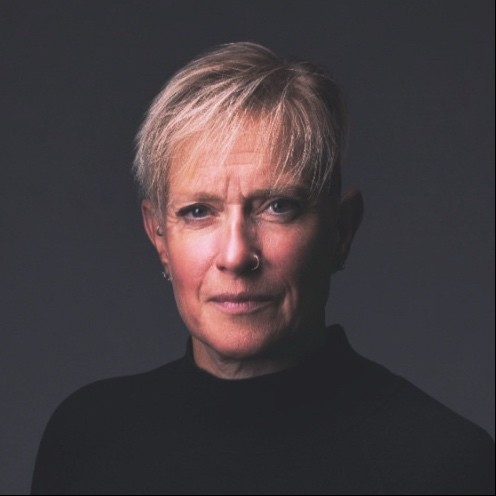
Sinéad Donovan, host. CA(SA)
Chair of the IFAC International Panel on Accountancy Education
Sinéad Donovan was appointed Chair of the IFAC International Panel on Accountancy Education, effective January 1, 2026. Ms. Donovan is a Fellow Chartered Accountant and served as a partner in Grant Thornton Ireland from 2005 and as Chairperson of the firm from 2021 until January 2025 following the successful amalgamation with Grant Thornton US.
She served as President of Chartered Accountants Ireland (CAI) 2023-2024 and successfully negotiated and secured a member vote for the historic amalgamation of CAI and CPA Ireland, making CAI the largest professional body in Ireland. Ms. Donovan served on the Council of CAI until May 2025.
Currently, Ms. Donovan sits on a number of boards as a non-executive director and chairs the audit and risk committee for the global organization Girls Not Brides. She also acts as strategic advisor to scaling and fast growth companies in the professional advisory and technology sector.