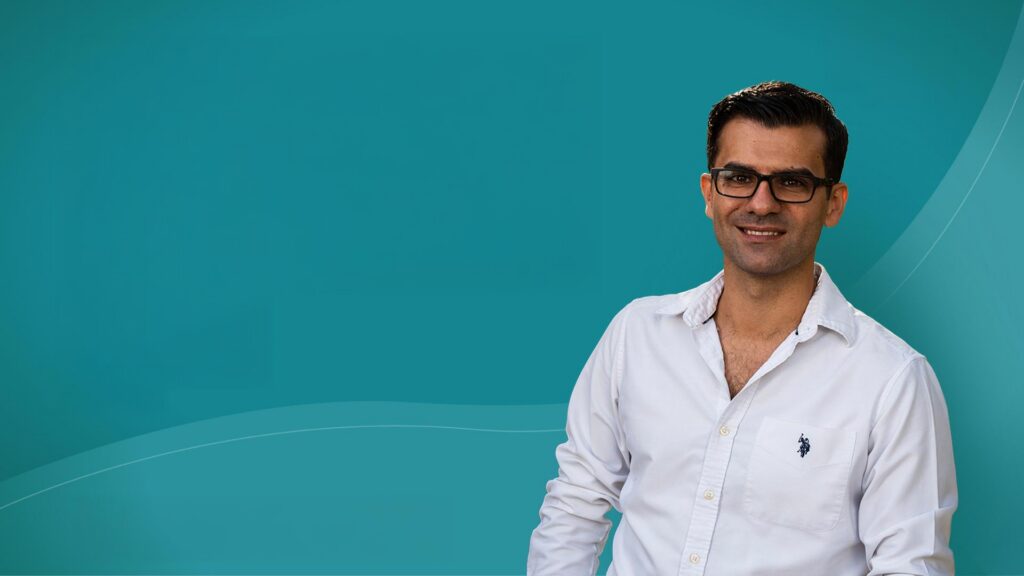
What does it look like when commercial ambition and social impact don’t just coexist — but actively fuel each other? Manuel Rodrigues, a Chartered Accountant member of South Africa, has spent the past 12 years answering that question in one of the most remote and underserved corners of the world.
In the third episode of Difference Makers Discuss Season 4, host Sinead Donovan catches up with Manuel to hear how his agri-business venture, EDP Mozambique (short for Escolha do Povo — “the people’s choice”), has evolved from a single retail store into a thriving micro-economy spanning the central and northern regions of Mozambique.
From a single store to a self-sustaining ecosystem
When Manuel launched EDP Mozambique in 2014, it was built on a straightforward — but ambitious — commercial model. Working in Vila Longwe, a rural village in Tete Province, he began building a network of small-scale farmers producing maize and soya, buying their produce back, and processing it for the formal market.
Fast forward to today, and the numbers tell a remarkable story. EDP Mozambique now works with approximately 55,000 maize farmers and 14,000 soya farmers, and the business has just opened its 11th retail store. But the real innovation lies in what Manuel built around that agricultural backbone.
Recognising the commercial opportunity (and the nutritional need) Manuel added a poultry dimension to the business. EDP established a commercial hatchery producing day-old chicks and a feed factory using the maize and soya sourced directly from its farmer network. Farmers are then trained to purchase chicks and feed, raise chickens, and sell them locally as a protein source. More recently, EDP has partnered with two local communities to develop their own fertilised egg production — bringing another link in the supply chain into the micro-economy.
The flywheel effect is striking: farmers sell grain to EDP, EDP produces feed and chicks, farmers buy feed and chicks to raise chickens, and farmers sell chickens back into their communities. Each rotation generates income, builds capacity, and expands the market for more grain.
The power of turning annual income into monthly income
One of the most compelling insights Manuel shares is the transformative effect poultry farming has had on the financial lives of smallholder farmers. Growing maize and soya means harvesting income once — maybe twice — a year. Poultry farming, by contrast, allows a farmer to turn their capital every 35 days.
That shift from annual to monthly earnings may sound straightforward, but its social impact is profound. It’s the difference between subsistence and enterprise — and it’s precisely the kind of leverage that a commercially-minded, numbers-driven Chartered Accountant is uniquely placed to identify.
Commercial discipline as a force for good
Sinead raises one of the more nuanced points in the conversation: what happens when human behaviour — in an environment of economic hardship — doesn’t always align with the programme’s values?
Manuel is candid. When EDP provided imported seeds as loans to boost farmer yields, around 20% of farmers disappeared without repaying. The response was clear and deliberate: those farmers were removed from the programme.
It’s a hard stance, but Manuel frames it as essential to long-term sustainability. EDP is not an NGO. It has corporate objectives and it runs for profit. That commercial foundation, he argues, is what has allowed the programme to survive while many similar initiatives — dependent on donor funding — have collapsed, particularly in the wake of significant US aid cuts to AfriChartered Accountancy in recent years.
“Africa’s only option now is to be self-sustaining. And in our environment, we’ve seen organisations that do what we do fall over in the past year because they didn’t have that view that in order to be sustainable long term, you have to stand on your own two feet.”
The message is clear: social enterprise without commercial rigour is fragile. EDP’s hybrid model — profit-driven but purpose-led — is what gives it staying power.
The Chartered Accountancy skill set in action
As a Chartered Accountant running a multi-site agri-business across a vast and underdeveloped country, Manuel is well-placed to speak to the practical value of his professional training. Managing 11 stores, tracking the movement of 6.5 million kilograms of maize purchased in a single year, standard costing, stock reconciliation, raw material controls across thousands of small transactions — none of it would be possible without a rigorous financial skill set.
Manuel is emphatic: his Chartered Accountancy training didn’t just help him build the business, it helped him spot problems before they became catastrophic. That diagnostic ability, he says, is perhaps the most underappreciated attribute a Chartered Accountant brings to an entrepreneurial venture. It also proved invaluable in government negotiations, where understanding the economics of the business meant knowing exactly where he could flex and where he couldn’t concede.
What’s next for EDP Mozambique?
Manuel’s medium-term ambitions are as practical as they are exciting. His next goal is to double the retail footprint from 11 to 22 stores, expanding the programme’s route to market across more of Mozambique’s vast geography. Looking further ahead, he’s planning an abattoir, a processing facility that would allow small-scale chicken farmers to sell their birds the moment they reach the required weight or age, protecting their margins by eliminating unnecessary feeding costs. That processed product would then move into the formal sector: retail stores, hotels, and restaurants.
It’s the next logical step in integrating this grassroots micro-economy into the mainstream national economy — and a signal that EDP’s ambitions are far from slowing down.
Watch, listen, and get involved
This is a genuinely remarkable conversation, one that challenges assumptions about what accountants do, what business is for, and what’s possible when commercial discipline meets genuine social purpose.
Inspired by what EDP Mozambique is doing? Manuel invites anyone who’d like to learn more — or get involved — to search EDP Mozambique on YouTube for a five-minute overview of the project, or to reach out to him directly via LinkedIn.
Listen to the podcast
This webinar is available as a podcast from all good Podcast providers such as Apple Podcasts, Spotify and others. Keep your ears peeled for the upcoming voices that promise to continue stirring the pot of change and inspiration right here on our platform.
Subscribe today on Apple Podcasts, Spotify, Amazon Music and other podcast networks.