The name is the mission
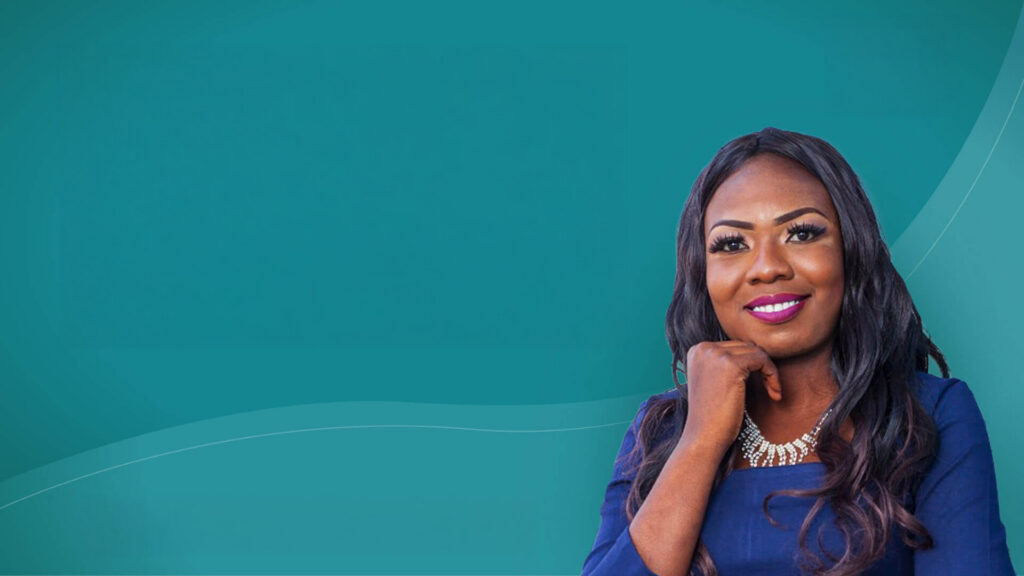
Young Dream Radiators takes its name from what Chanda wants it to do. Radiate means light. The foundation exists to bring light to the dreams of young people.
The trigger was the One Young World summit in Manchester in 2022, which she attended as an ambassador nominated by the Zambia Institute of Chartered Accountants.
What One Young World actually did
Asked to explain One Young World for listeners who may not know it, Chanda describes a community built to bring expertise from different fields together to develop a generation of young people who can make an impact, with the sustainable development goals as the framework.
What it gave her was less a plan than a permission. Surrounded by people making real change in their own countries, carrying their dreams with visible confidence, she reached a simple conclusion. If these people can do it, nothing can stop me.
Her own phrase for what happened is precise: the confidence that was hidden within me was being built. She came home and opened the foundation.
The problems she is addressing
Chanda is specific about what she sees in Zambia. Young people drop out of school. Behind that sit family circumstances, bullying, criticism and discrimination. Many of them, she says, are lacking a voice in their life. She decided she could be part of that voice, offering support and mentorship.
She also brings her profession directly into the work. If a young person cannot complete their education or acquire a skill, financial literacy still gives them something durable. Saving, financial discipline, and above all the dangers of over borrowing, which she names as one of the biggest obstacles she encounters.
How it works in practice
The model is deliberately unglamorous. Chanda writes letters to institutions, schools and communities. When one opens the door, she and her team go in and address the issues directly.
Her first large outreach was a test of whether anyone wanted this at all. She made a deliberate move into a community, worked with an existing foundation to gather young people together, and waited to see what happened. A large number came, and they poured out their hearts. They said they needed this.
That was the moment she knew to chase it with everything she had.
It has since changed shape. She no longer relies only on letters, because institutions have seen what the foundation can do and now invite her in.
The honest part
Sinead Donovan asks directly about funding, and Chanda does not soften the answer. Her job funds the organisation. She describes the pressure of running both, and the discipline it requires: you plan a calendar of programmes for the year ahead, and you save towards it.
The hardest part is when the money is not there. She describes it as a bit of a challenge, and then more plainly, that it is so bad when you cannot run a programme because funds are not available and people are longing for it.
Her eleven volunteers need motivating too, because they are giving their time for nothing.
Asked what she would do with a magic wand, her answer is simple. If the funding existed, she would put herself into this wholeheartedly, because it is her passion.
Social media, weighed honestly
Asked whether social media is helping or harming the next generation, Chanda does not hedge. In her observation the negative currently outweighs the positive.
Her reasoning is about discipline rather than technology. Her generation, she says, takes everything posted on social media as truth without filtering it. Handling negative information and negative news was one of the central messages of her most recent university outreach, because she sees it feeding directly into mental health difficulties.
Her call to action is aimed at organisations like hers and communities like One Young World: amplify the conversation about how to use social media well, and spread the right information.
It is also why the face to face work matters so much. As Sinead Donovan notes, when so much of young people’s engagement happens in the virtual world, learning from mentors in person becomes critically important.
Growing beyond Zambia
Students from Zimbabwe, the Democratic Republic of Congo and Angola have already reached out to be part of it. Chanda wants to expand across the region, and is candid that limited resources and the need for more people on board are what stand in the way.
Progress is real, though. She has established a centre at Mulungushi University, where she took her own bachelor’s degree, with a launch planned for December.
What she is asking for
Sinead Donovan puts the question that matters: how can the global family of accountants help?
Chanda’s answer has three parts, and none of them is only about money.
First, amplify her voice, her vision and her mission.
Second, funding, which she acknowledges is the critical constraint on setting up the skills centre she wants to build.
Third, and the one that lands hardest, training and mentorship for herself. She describes making a lot of mistakes with nobody to ask what to do. People who have gone ahead of her offering that guidance would, she says, be genuinely appreciated.
A full circle moment
Sinead Donovan draws the thread together at the close, and it does encapsulate what the series is about. Because Dorica Chanda became a Chartered Accountant, she was nominated to One Young World. At One Young World she gained skills and the confidence to follow her passion. She is now helping the next generation.
Asked whether she would encourage young people into the profession, Chanda is emphatic. Accountancy teaches almost anything that helps you be sustainable. Even for those who do not want the full route, she urges them to learn the basics, because everyone needs the language of money principles.
Everyone, as she says at the close, has that ability to make a difference.