
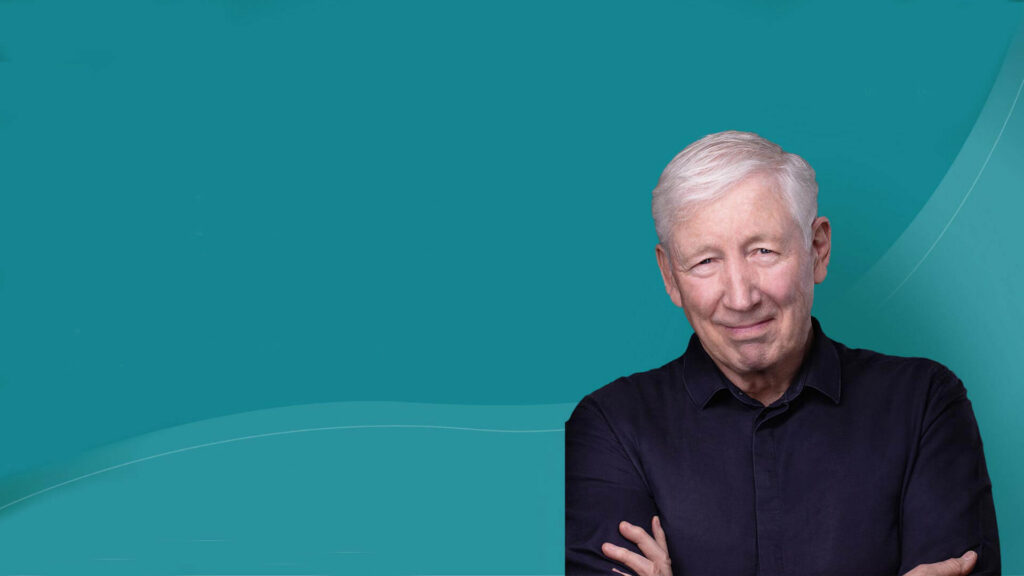
Ask Kingsley Aikins what networking is and he will not call it an art or a science. He calls it a process. That distinction runs through the whole of his conversation with Sinead Donovan, and it is what makes his advice usable rather than merely inspiring.
A diaspora is no longer a niche idea
Aikins begins with the word itself. Diaspora comes from two Greek words, dia meaning over and speiro meaning scattering. It was first used of the exile of the Jews from Babylon in the fifth century BC, and for most of history it stayed tied to that story.
Not any more. There are now 305 million people living outside the country they were born in, roughly double the figure in 1970. What was once the preserve of a handful of nations has gone mainstream, and around 120 countries now run some form of diaspora strategy.
India is among the most striking examples. Until 2002 it showed little interest in its citizens abroad. The Vajpayee government then commissioned a global survey, and the response was blunt: too corrupt, too bureaucratic, too little say. Rules changed, an annual conference followed, and thousands of Indian chief executives now return every February. There are 400,000 Indians in Silicon Valley, and several of the world’s largest technology companies are run by members of that diaspora.
The idea has scaled downwards as well as outwards. Aikins has written diaspora strategies for Copenhagen and Cornwall, for the Basque region and Catalonia, and counties including Donegal, Mayo and Cork are all active. As Sinead Donovan put it during the conversation, it is a global alumni network, the same loyalty you feel to a firm or a county jersey, taken to a much larger scale.
Give while you live
Aikins describes his work as mining for coal and mining for diamonds. One of the diamonds was Chuck Feeney, who gave away eight billion dollars, much of it to education, across Ireland, Australia, Vietnam and the United States.
Feeney was a disciple of Andrew Carnegie, who believed you should give your wealth away while you are alive rather than leave it behind. Carnegie’s line was that he who dies rich, dies disgraced. Feeney’s own version was funnier and just as pointed: he wanted his final cheque, the one to the undertaker, to bounce. There is, he said, no roof rack on the hearse.
This matters commercially as well as morally. The consultancy Cerulli Associates estimates around 125 trillion dollars will pass between generations in the coming decades. How that money moves is a live question for anyone advising wealthy clients.
Asked whether networking simply reduces to values, Aikins is honest enough to say no. A smidgen of self interest enters most relationships, and there is nothing wrong with that so long as it does no damage. He quotes the former Australian prime minister Paul Keating: in the great race of life, always back self interest, because at least you know it will be trying.
The hidden cost of COVID
The most practical part of the conversation is Aikins’s diagnosis of what changed after the pandemic. Our networks shrank. We hunkered down with family, friends and a few close business contacts, what he calls the inner concentric ring, and let the outer ring of weak ties and loose associations slip. That outer ring is where opportunity actually lives.
He sees five consequences inside the organisations that call him in:
- Less business development
- Less learning on the job, particularly for the next generation
- Less serendipity, luck and chance, because nobody is bumping into anyone at the coffee station
- Less loyalty, with people moving roles like never before
- Less company culture
Senior people recognise the pattern because they have lived it. The technical skills that got them their first job matter enormously at the start and then matter less, because everybody has them. You cannot compete on what everybody has. Relationships become the differentiator. Aikins puts it memorably: early in your career you get paid for what you do, but later in your career you get paid for who you are.
On the return to the office, he is measured. He does not expect a full five days, but thinks four days in and one at home may be where this settles.
The room full of strangers
Andy Lopata’s book *And Death Came Third* gives Aikins his favourite framing of why networking is hard. The third greatest fear people report is death. The second is walking into a room where they know nobody. The first is public speaking.
For the room full of strangers, Aikins offers concrete tactics. A name badge is a permission device to talk to a stranger. Do not try to break into a group of three or four deep in conversation, because you will feel like you are invading their space. Look for ones and twos, and position yourself near the bar, where people turn away with a glass in their hand and no one to talk to. Then simply put your hand out, say your name and smile. People will smile back, he says, even if only internally.
He also points to an odd contradiction. We tell children not to talk to strangers, yet statistically children are at greater risk from friends and family. Getting past that inherited stranger danger is, he argues, critical.
Copy and steal everything
Asked for a final word for Chartered Accountants listening, Aikins recalls advice from a founder member of an organisation called CASE, which stood for copy and steal everything. Work out who does this well, then spend time around them.
His own example was Tony O’Reilly, a world class networker and speaker. What Aikins saw that audiences did not was the preparation: hours spent on a single speech, lines and jokes tried out in private. The delivery looked effortless because the work had already happened.
Warren Buffett makes the same point in a different way. He does not display his Wharton qualifications. The one certificate on his wall is a Dale Carnegie certificate in public speaking, which he said increased his value by a hundred per cent.
Four takeaways
Sinead Donovan closed with the notes she had taken:
- The number one predictor of success is an open network
- The five people you spend the most time with will shape you
- He who dies rich, dies disgraced, and there is an art to giving
- The four fundamentals of networking are your personal, strategic, operational and online networks
Networking, as Aikins insists, is neither an art nor a science. It is a process, and processes can be learned.
Listen to the podcast
This webinar is available as a podcast from all good Podcast providers such as Apple Podcasts, Spotify and others. Keep your ears peeled for the upcoming voices that promise to continue stirring the pot of change and inspiration right here on our platform.
Subscribe today on Apple Podcasts, Spotify, Amazon Music and other podcast networks.